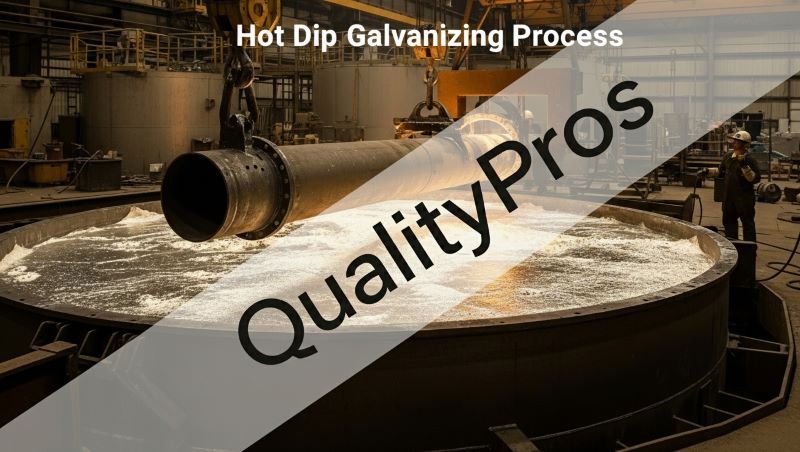
Hot dip galvanizing (HDG) is a widely used method to protect steel from corrosion by coating it with a layer of zinc. This process enhances the durability and lifespan of steel, making it indispensable in industries like construction, infrastructure, and manufacturing. By submerging steel in molten zinc, HDG creates a robust, metallurgically bonded coating that can withstand harsh environments for decades.
In this blog post, we’ll explore how hot dip galvanizing works, its detailed steps, industry standards, coating requirements, safety precautions, common issues with remedies, and relevant search keywords for further exploration.
What is Hot Dip Galvanizing?
Hot dip galvanizing involves immersing steel parts in a bath of molten zinc at approximately 450°C (842°F) to apply a protective zinc coating. The zinc forms a metallurgical bond with the steel, creating a series of zinc-iron alloy layers topped with a pure zinc layer. This coating protects the steel through:
- Barrier Protection: The zinc layer shields the steel from moisture and oxygen, preventing rust.
- Sacrificial Protection: Zinc corrodes preferentially, protecting the steel even if the coating is scratched.
According to the American Galvanizers Association, HDG steel can last 50 years in rural environments and 20–25 years in urban or coastal areas with minimal maintenance, making it a cost-effective solution for corrosion resistance.
How the Hot Dip Galvanizing Process Works
The HDG process is a multi-step procedure that ensures a uniform, durable zinc coating. It involves surface preparation, immersion in molten zinc, and post-treatment to achieve optimal corrosion resistance. The zinc reacts with the steel to form intermetallic layers, which are harder than the base steel and provide excellent abrasion resistance.
Chemical and Metallurgical Process
During immersion, zinc diffuses into the steel surface, and iron diffuses outward, forming distinct layers:
- Gamma (Γ) Layer: Fe₃Zn₁₀ (75% zinc, 25% iron), closest to the steel, highly corrosion-resistant.
- Delta (δ) Layer: FeZn₇ (90% zinc, 10% iron), provides hardness and durability.
- Zeta (ζ) Layer: FeZn₁₃ (94% zinc, 6% iron), transitional layer.
- Eta (η) Layer: Pure zinc, ductile and corrosion-resistant.

These layers form through a diffusion process at high temperatures, not a simple chemical reaction. The resulting coating thickness typically ranges from 50–150 micrometers, depending on steel thickness and immersion time.
Steps of the Hot Dip Galvanizing Process
The HDG process involves several critical steps to ensure a high-quality coating. Each step is carefully controlled to meet industry standards.

- Surface Preparation
- Degreasing: Removes oils, grease, and organic contaminants using alkaline or acidic solutions to ensure a clean surface.
- Pickling: Immerses steel in dilute acid (e.g., hydrochloric or sulfuric acid) to remove rust, mill scale, and oxides, exposing a clean steel surface.
- Fluxing: Applies a zinc ammonium chloride solution to prevent oxidation before immersion and promote zinc adhesion.
- Galvanizing
- The cleaned steel is submerged in a bath of molten zinc at 445–465°C (833–869°F). Immersion time varies (typically 3–10 minutes) based on part size and thickness.
- Zinc reacts with the steel, forming the intermetallic layers described above.
- Cooling and Inspection
- The steel is withdrawn from the zinc bath and cooled, either in air or a quenching tank (often with a passivation solution like sodium dichromate to prevent early oxidation).
- The coating is inspected for thickness, uniformity, and adhesion using methods like magnetic gauges or visual checks.
- Post-Treatment (Optional)
- Passivation or chromating may be applied to enhance corrosion resistance or prepare the surface for painting.
- Excess zinc (dross or ash) is removed to ensure a smooth finish.
Industry Standards for Hot Dip Galvanizing
Several international standards govern the HDG process to ensure quality and consistency. Key standards include:
- ASTM A123/A123M (USA): Specifies minimum coating thickness for steel products based on material thickness and category (e.g., structural shapes, plates). For example, steel >6 mm thick requires a minimum coating thickness of 85 micrometers.
- ISO 1461 (International): Defines coating thickness, adhesion, and appearance requirements. It categorizes steel by thickness and specifies minimum zinc coating mass (e.g., 610 g/m² for steel >6 mm).
- BS EN ISO 1461 (Europe): Similar to ISO 1461, widely used in the UK and Europe, with detailed requirements for coating durability.
- AS/NZS 4680 (Australia/New Zealand): Specifies HDG requirements for local conditions, including coastal environments.
- ASTM A153/A153M: Covers hardware (e.g., bolts, nuts) with specific coating thickness requirements.
These standards ensure the coating meets performance expectations, with requirements varying by steel thickness, application, and environmental exposure.
Coating Requirements
The quality and effectiveness of the zinc coating depend on several factors, including thickness, uniformity, and adherence. Key coating requirements include:
- Thickness: Varies by steel thickness and standard. For example:
- ASTM A123: 45–100 micrometers for steel 1.5–6 mm thick.
- ISO 1461: 70–85 micrometers for steel >3 mm.
- Uniformity: The coating must cover all surfaces, including edges and corners, without bare spots or peeling.
- Adhesion: The zinc must bond metallurgically to the steel, tested via hammer or bend tests to ensure no flaking.
- Appearance: A smooth, spangled finish is typical, though minor imperfections (e.g., small lumps) are acceptable if they don’t affect performance.
- Coating Mass: Measured in grams per square meter (g/m²). For example, ISO 1461 requires 505 g/m² for steel 3–6 mm thick.
Coating thickness is critical, as thicker coatings provide longer protection but may affect weldability or aesthetics.
Safety Precautions in Hot Dip Galvanizing
The HDG process involves high temperatures, hazardous chemicals, and heavy equipment, necessitating strict safety measures:
- Personal Protective Equipment (PPE):
- Heat-resistant gloves, aprons, and face shields to protect against molten zinc splashes.
- Respirators to avoid inhaling acid fumes during pickling or fluxing.
- Ventilation: Adequate exhaust systems to remove fumes from pickling acids and zinc vapors.
- Temperature Control: Monitoring zinc bath temperature to prevent overheating, which can cause explosions if moisture is present.
- Moisture Management: Ensuring steel parts are dry before immersion to avoid steam explosions in the zinc bath.
- Chemical Handling: Safe storage and disposal of acids and flux solutions to prevent spills or environmental harm.
- Training: Workers must be trained in handling molten zinc, operating cranes, and emergency procedures.
- Fire Safety: Fire extinguishers and suppression systems to address zinc fires, which require dry powder or sand (not water).
Compliance with occupational safety standards, such as OSHA (USA) or WorkSafe (Australia), is essential to minimize risks.
Common Issues and Remedies
Despite its reliability, the HDG process can encounter issues that affect coating quality. Below are common problems, their causes, and remedies:
- Bare Spots or Uncoated Areas
- Cause: Incomplete cleaning, residual oils, or oxides preventing zinc adhesion.
- Remedy: Enhance degreasing and pickling processes; ensure thorough rinsing after fluxing.
- Excessive Zinc Build-Up (Dross or Ash)
- Cause: Improper withdrawal speed or zinc bath contamination.
- Remedy: Control withdrawal rate and skim the zinc bath to remove impurities.
- Rough or Lumpy Coating
- Cause: High silicon content in steel or prolonged immersion.
- Remedy: Use low-silicon steel or adjust immersion time; consult steel suppliers for compatible grades.
- Peeling or Flaking
- Cause: Overly thick coating due to reactive steel or excessive immersion.
- Remedy: Optimize immersion time and bath temperature; test steel reactivity beforehand.
- White Rust (Wet Storage Stain)
- Cause: Moisture trapped on galvanized surfaces during storage, forming zinc hydroxide.
- Remedy: Store in dry, ventilated conditions; apply passivation or light oil coating post-galvanizing.
- Distortion or Warping
- Cause: Thermal stress from high zinc bath temperatures, especially in thin or asymmetrical parts.
- Remedy: Use balanced designs, pre-heat parts, or employ slower cooling methods.
- Poor Adhesion
- Cause: Inadequate surface preparation or flux contamination.
- Remedy: Ensure thorough cleaning and fresh flux solution; inspect flux quality regularly.
Applications of Hot Dip Galvanized Steel
HDG steel is used in numerous industries due to its durability and corrosion resistance:
- Construction: Roofing, siding, structural beams, and scaffolding.
- Infrastructure: Bridges, guardrails, utility poles, and highway signs.
- Agriculture: Farm equipment, silos, and livestock fencing.
- Industrial: Piping, storage tanks, and heavy machinery components.
- Energy: Wind turbine towers, solar panel frames, and transmission poles.
The Galvanizers Association notes that over 50% of steel in infrastructure projects is hot-dip galvanized, highlighting its widespread adoption.
Benefits of Hot Dip Galvanizing
- Superior Corrosion Resistance: The thick zinc coating and intermetallic layers provide decades of protection.
- Cost-Effectiveness: Low maintenance and long lifespan reduce life-cycle costs.
- Complete Coverage: Immersion ensures all surfaces, including internal cavities, are coated.
- Sustainability: Zinc and steel are fully recyclable, and the process has a low environmental footprint.
- Durability: Hard alloy layers resist abrasion and mechanical damage.
Common Standards and Testing Methods
To ensure quality, HDG coatings are tested per industry standards:
- Coating Thickness: Measured using magnetic gauges (ASTM E376).
- Adhesion: Tested via hammer or bend tests (ASTM A123).
- Appearance: Visual inspection for uniformity and defects (ISO 1461).
- Salt Spray Testing: Evaluates corrosion resistance (ASTM B117).
Conclusion
Hot dip galvanizing is a robust, reliable method for protecting steel from corrosion, offering unmatched durability and cost-effectiveness. By following precise steps—surface preparation, immersion, and cooling—and adhering to standards like ASTM A123 and ISO 1461, the process ensures high-quality coatings that last decades. While challenges like bare spots or white rust can occur, proper techniques and remedies address these issues effectively. With applications spanning construction, infrastructure, and beyond, HDG remains a cornerstone of modern engineering. By understanding its processes, standards, and precautions, industries can maximize the benefits of this time-tested technology.