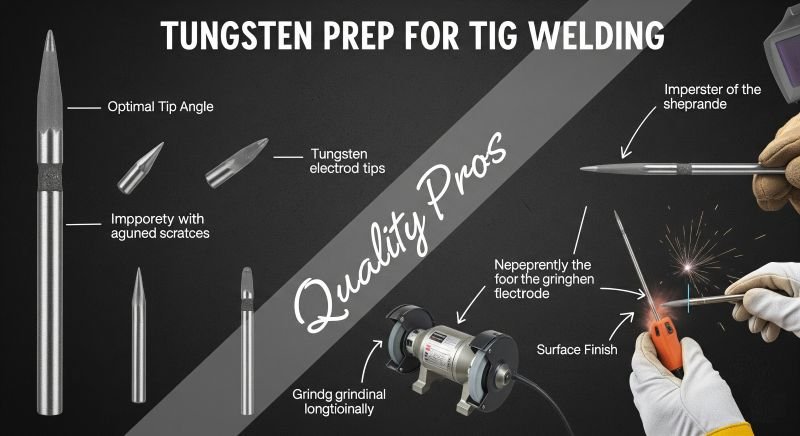
Tungsten electrodes are the unsung heroes of TIG welding—a poorly prepped tungsten causes arc wander, contamination, and weak welds. Yet 90% of beginners skip critical prep steps! Follow this step-by-step guide (with pro forum secrets) to transform your welds.
⚡ Why Tungsten Prep Dictates Weld Quality
The tungsten electrode focuses 6,000°F of arc energy into a pinpoint beam. Its shape controls:
- Arc stability (no wandering!)
- Penetration depth
- Bead width
- Risk of contamination (tungsten in your weld = weak spots) 18
💡 Fun Fact: A cross-ground tungsten can reduce arc focus by 70% vs. longitudinally ground! 8

🔍 Step 1: Picking the RIGHT Tungsten (Color Matters!)
Not all tungstens are created equal! Match the alloy to your metal:
| Tungsten Type | Color | Best For | Avoid | Pro Tip |
|---|---|---|---|---|
| Pure | Green | AC welding (Aluminum/Mg) | DC welding | Balls easily but wears fast |
| 2% Lanthanated | Blue | AC/DC (steel, SS, Al) | None | King of versatility; holds point well in AC 615 |
| 2% Thoriated | Red | DC (steel/SS) | AC (unless thin) | Radioactive—grind with ventilation! 6 |
| Ceriated | Grey | Low-amp DC/AC | High-amp | Cheap thoriated alternative |
| Zirconiated | Brown | High-amp AC (Al) | DC | Resists contamination |
Forum Wisdom: “For inverter machines, skip pure (green) tungsten—it arcs poorly. Blue lanthanated is my go-to for aluminum.” – WeldMonger, Welding Forum 15
✨ Step 2: Grinding Like a Pro (The 5 Golden Rules)
Tools Needed: Diamond wheel grinder (dedicated!), angle guide, safety glasses.
- Direction is EVERYTHING:
- ✅ Do: Grind longitudinally (parallel to the rod).
- ❌ Don’t: Grind circumferentially (creates ridges that cause arc wander) 18.
Why?: Electrons flow smoothly along the grain—not across grind lines!
- Angle Matters:
- 20–30°: Ideal for most DC welding (steel/stainless). Sharp focus, stable arc 1.
- 60°+: Blunt angles for high-amp work—prevents tip melting 8.
- Flat Tip Trick:
After tapering, blunt the tip with a 0.5–1mm flat spot (≈10% of tungsten diameter). Prevents balling in DC and extends electrode life 14. - Dedicate Your Wheel:
Use a diamond wheel only for tungsten. Steel dust embeds into tungsten → weld contamination! 8 - Cutting Tungsten:
- ✅ Use abrasive cutters or diamond wheels.
- ❌ Never snap or use pliers—micro-fractures cause erratic arcs 6.
🎯 Step 3: Shaping for Your Material (AC vs. DC)
A. DC Welding (Steel/Stainless/Ti):
- Shape: Sharp point (20–30°) + micro-flat tip 8.
- Why?: Focuses arc for deep penetration and narrow beads.
B. AC Welding (Aluminum/Magnesium):
- Traditional: Balled tip (for transformer machines).
- How to ball: Set to DCEP, blast 220+ amps on scrap—forms a natural ball 1.
- Modern (Inverter Machines): Pointed tip (30°)!
- Why?: High-frequency starts stabilize the arc without balling. “A sharp blue tungsten at 120Hz welds cleaner than any balled green rod!” – Dave Powelson, Forum Expert 15.
⚠️ Ball Size Rule: Never exceed 1.5x the electrode diameter—or it’ll break off mid-weld! 1
🤯 Step 4: Avoiding Deadly Prep Mistakes
- Mistake 1: Touching tungsten to workpiece → contamination.
- Fix: STOP, regrind—black/gold spots mean impurities 14.
- Mistake 2: No gas post-flow → oxidized tungsten.
- Fix: Set post-flow to 1 sec per 10 amps (e.g., 15A = 1.5 sec) 7.
- Mistake 3: Grinding against the grain → arc wander.
- Fix: Use a longitudinal jig like the YesWelder Sharpener 1.
Forum Hack: “Stubby tungsten (<2″ long) overheats. Use 4-6″ lengths for better heat dissipation!” – FarmWelding, Reddit 15.
🛠️ Pro Tips from the Trenches
- Double Taper Trick: For high-amp AC work, grind two angles: 30° base + 60° tip. Boosts stability and reduces erosion 15.
- The “Broccoli” Effect: Thoriated (red) tungsten in AC grows spiky “broccoli” tips → weld contamination. Switch to lanthanated (blue) 15.
- Gas Lens Upgrade: Use a gas lens collet for better shielding—lets you extend tungsten 1/2″ past cup for tight spaces! 14
💎 Key Takeaways
- Grind longitudinally—always!
- DC welding? Pointed + flat tip (20–30°).
- AC welding? Pointed lanthanated (blue) > balled pure (green).
- Contaminated? Regrind IMMEDIATELY.
Your tungsten is your laser beam—shape it right, and you’ll carve metal like butter. 🧈 Practice these steps, and watch your beads turn from lumpy caterpillars to stacked dimes!